
• Personal advice
  • Installed within 6 weeks
  • Affiliated with SGZE
  • Certified company
Carefree enjoyment of the sun
Free consultation

Types of charging stations

Which one should you choose?

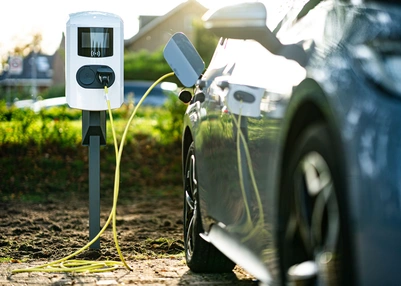
Man charging a grey electric car at a charging post next to a hedge

Demand for electric cars is rising sharply, which makes an efficient charging infrastructure more important all the time. With a charging station at home you avoid the queues at public points. In choosing the right one there are several options and extra functions to weigh up. In this blog adviser Christiaan explains which types of charging station there are and which functions suit your situation best.

Man charging a grey electric car at a charging post next to a hedge

What should you look at when buying a charging station?

For the best charging experience you want a station at home, so you know you can always charge when you get back. In choosing one there are a few things to consider: whether you want a free-standing station or a wall box, whether you want a loose or a fixed cable, and whether dynamic load balancing matters in your situation. Having a drive of your own is handy too, because a charging station cannot be placed just anywhere.

Want to know more about charging stations?
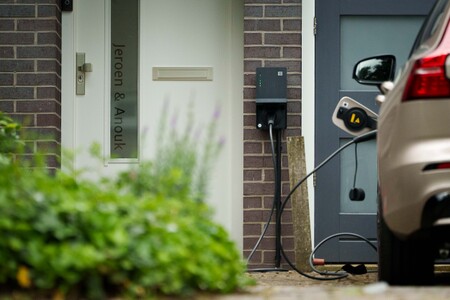
Charging station on the facade next to a front door with a connected car on the driveway

On a post or on the wall?

Have you thought about where the station should go? A wall box is less conspicuous, but it is not always possible. If a wall box is out of the question, a free-standing station is the answer. Your adviser will talk through which suits your situation best, and will say whether any digging is needed.

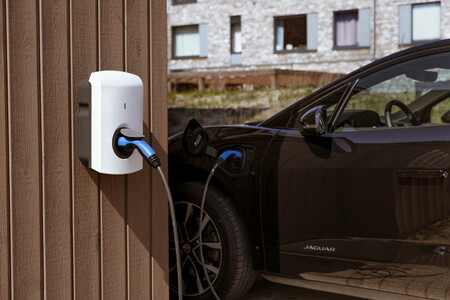
White Alfen Eve Single S-line charging station on a wooden wall with a connected black Jaguar

A fixed or a loose cable

Most charging stations give you a choice between a fixed and a loose cable. A fixed cable stays attached to the station, so you do not have to fetch one from the boot. A loose cable gives you freedom, because you can take it with you, and it means no cable hangs about when nothing is charging, so you cannot drive over it or trip on it.

Dynamic load balancing

Do you have plenty of electrical equipment at home that draws a lot of power? Then a charging station with dynamic load balancing is a wise choice. It watches the current power use and keeps the system from being overloaded: when a lot of power is being drawn, the station charges more slowly or pauses. That flattens the peaks and keeps everything within its limits.

Want to know more about dynamic load balancing?
Dynamic load balancing

A drive of your own?

Ideally the charging station goes on a drive of your own, so you always have somewhere to charge. But what if you have no drive?

You can ask your council for a public charging point. The drawback is that it is sometimes occupied, and the process from request to installation can take a long time.

Without a drive you can also ask the council for an exemption to run a charging cable across the pavement. You do need a parking space that borders directly on the pavement, and you have to consider the safety of your neighbours and of people walking past, for instance by using a cable mat or special paving slabs with a channel. Ask your council what is possible and on what conditions.

Charging speed and connector

When choosing between types of charging station, the power and the charging speed matter too. Power is given in kilowatts (kW). It helps to look at the maximum charging speed of your car and at the power it can take, so you get the most out of the station. Home charging stations often deliver 11 kW, so make sure yours charges at the speed your car can use.

The type of cable matters as well, because the connector differs per car. In Europe most new electric cars have a type 2 connector, so check whether you need a type 1 or a type 2 cable. A type 1 cable carries a lower voltage and charges more slowly; a type 2 cable carries more and charges considerably faster.

To find out which cable you need, look in the manual of your car, or look at its charging port. A five-pin socket is a type 1 connector; a seven-pin socket is type 2. If you are unsure, our advisers are ready to help you make the best choice.

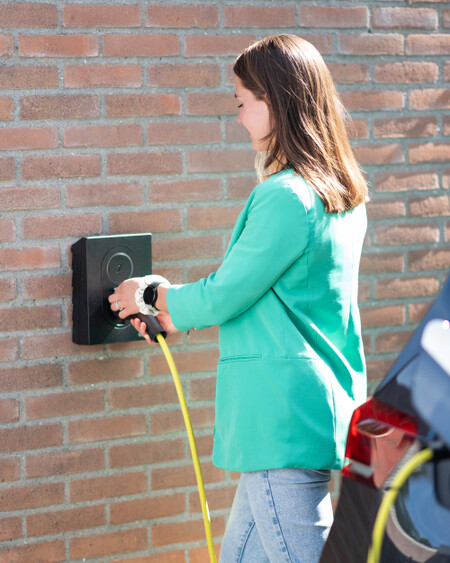
Woman in a green blazer plugging a yellow charging cable into a black charging station on a brick wall

Colour and looks

When looking for the best charging station for your home, you naturally consider how it looks. Happily charging stations come not only in different shapes and sizes but in different colours. The TeltoCharge station, for instance, comes in five.

Would you like personal advice?

It matters that you get the best charging station for your own situation, and our advisers are happy to help you choose. If you need more information, have doubts or want to discuss something specific, our experts are ready for you.

Request a no-obligation consultation so we can answer whatever is still open.

Efficient charging with Max

Would you like a smart, carefree charging solution? Discover Max. Max, our energy expert, stands for ease of use and helps you connect and manage your charging station and your other sustainable equipment intelligently.

Read more about Max
Max Charging

Frequently asked questions

Ruben, adviser at Dijkman Zonne-energie
Ruben Adviser
9.1/10 | 2064 reviews
J.Boerman 9

“De installalatie keurig volgens offerte en tijdsplanning snel en vakkundig aangebracht.”

Want to know more about the types of charging station?

Then request a consultation with Ruben

Ruben is an adviser at Dijkman Zonne-energie and is happy to answer all your questions about charging stations.

Request a consultation No obligation!
Ruben, adviser at Dijkman Zonne-energie
Ruben Adviser

Read more articles

How do solar panels work?

How do solar panels work? Our adviser Hans explains where solar energy comes from, what the inverter does and where panels work best.

Read more

Load balancing for your charging station: all you need to know

What is load balancing? Why is it sensible in a charging station, and is it required? Read all about it in this blog.

Read more