

J.Boerman 9
“De installalatie keurig volgens offerte en tijdsplanning snel en vakkundig aangebracht.”
Before you buy solar panels you naturally look into the cost and the yield. What do solar panels produce? How many do you need, and what exactly can you save? At Dijkman Zonne-energie we are happy to help you make the best choice for your situation. In this blog adviser Nick tells you everything you want to know about the yield of solar panels.
First of all you want to know what solar panels produce. Besides the rating of the panels in watt-peak (Wp), a number of things affect their yield. For instance:
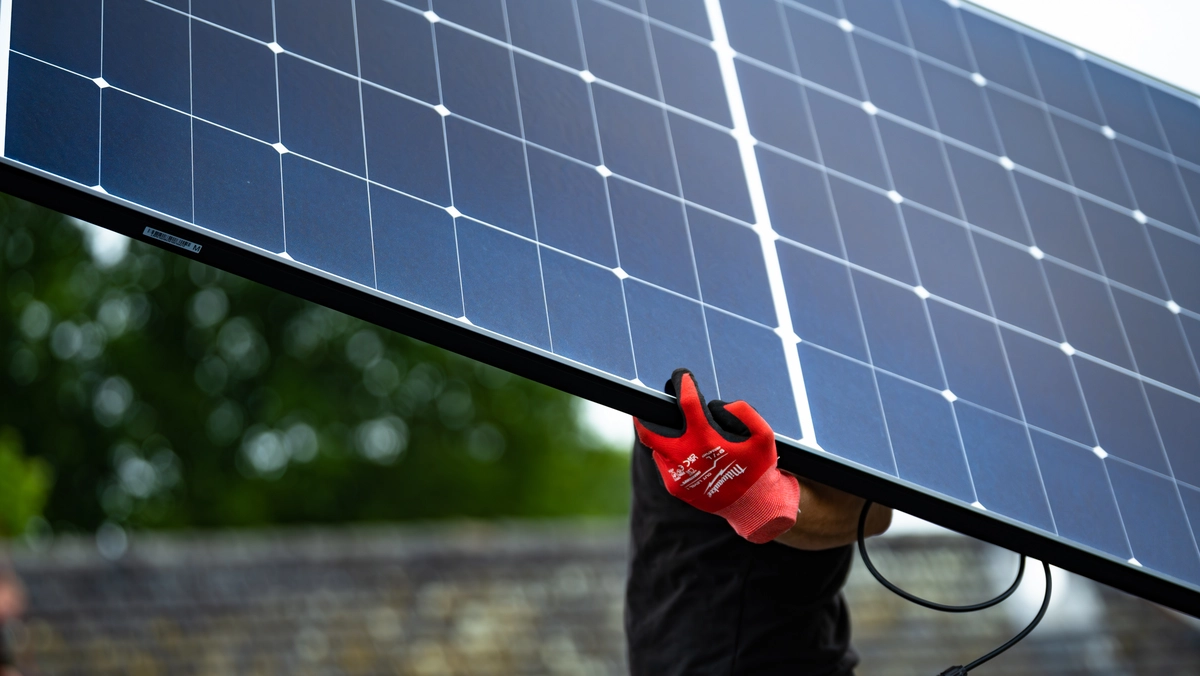
How much power will your system generate? To give you an idea, we have worked through an example. Bear in mind that the exact yield differs per type of panel.
We assume one panel is rated at 430 Wp on average. Nine panels of 430 Wp therefore come to 9 x 430 = 3,870 Wp.
The Netherlands is not always sunny, so panels do not produce electricity (in kWh) at their peak rating all the time. That is why we use a usable capacity of 85% in the sum, which means about 0.85 kWh of electricity per 1 Wp. For nine panels the usable capacity works out at 0.85 x 3,870 = 3,290 kWh a year.
The capacity also depends on the outside factors mentioned above, of course.
If you choose panels with an Enphase, SMA or SolarEdge inverter, the app shows exactly what your panels produce each day.
The price depends on a number of things, mainly the type of panel and how many you need. That is why we like to come round and look at your situation with you. Then we can make a quote of our own, covering how many panels you need to meet your consumption, what the installation costs and what it is expected to produce.
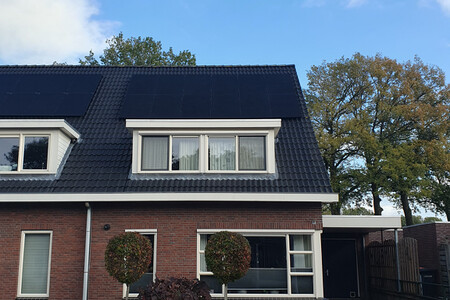
Below is an indication of what solar panels cost. When deciding how many you need, it is wise to allow for your future consumption as well, not only for what you use today.
Indicative price: € 3,500 - € 4,900
Yield: 3,200 kWh
Saving: € 1,280 a year
Indicative price: € 4,250 - € 4,900
Yield: 4,000 kWh
Saving: € 1,600 a year
Indicative price: € 5,500 - € 8,100
Yield: 6,000 kWh
Saving: € 2,400 a year
Now that you have an idea of the cost and the yield, you can see how much you stand to save on your energy bill, especially with prices as high as they are. That saving is what pays the system back. If you have asked us for a quote, the payback time is part of it. On average it is about five or six years.
You can also still benefit from net metering. If your panels generate more than you use, you can feed the surplus back to your energy supplier. You are paid for it, or it is set off against the power you used.
It is also good to know that you get part of the cost back from the tax office, namely the VAT. We arrange that for you, so you need not think about it. From 1 January 2023 the government intends to bring the VAT on solar panels down to 0%.
Our tip: ask your local council as well whether any subsidies or contributions are available.
Solar panels are not only good for your energy bill; they are good for the environment too. How so? Grey electricity usually comes from burning fossil fuels, which releases CO2 and harms the climate. Generating solar energy is therefore a good way to cut this country's emissions. Did you know that every kWh you generate saves about 0.46 kilos of CO2?
Solar panels are not (yet) entirely free of CO2, because making and shipping them releases some. Happily, more and more companies are looking for ways to produce panels without emissions, and without other materials that harm the environment such as lead, fluorine and PFAS.
The yield of solar panels depends on several things: the time of year, the type of roof, the angle and the type of panel. Want to know exactly what yours generate? Discover Max Control. This handy app gives you a detailed view of what your panels produce.
Read more about Max Control

“De installalatie keurig volgens offerte en tijdsplanning snel en vakkundig aangebracht.”
Nick is an adviser at Dijkman Zonne-energie and is happy to answer all your questions about the cost and yield of solar panels.
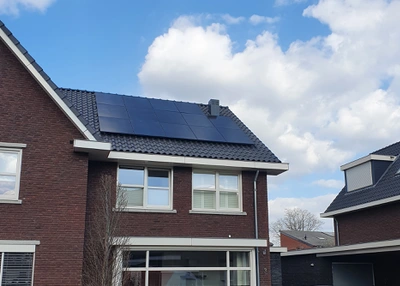
What is net metering? Why is the scheme being phased out and what will replace it?
Read more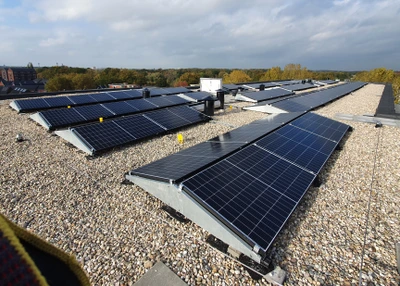
I have a flat roof, can I have solar panels too? Certainly. A flat roof even has a few advantages.
Read more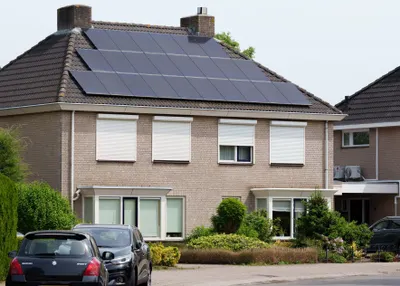
How do solar panels work? Our adviser Hans explains where solar energy comes from, what the inverter does and where panels work best.
Read more