Frequently asked questions
-
Is my roof suitable for solar panels?
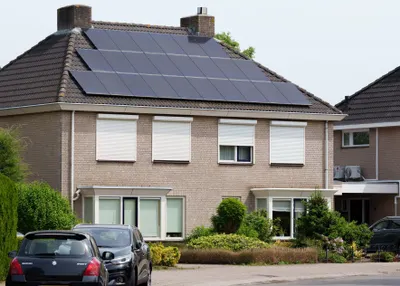
More than 90% of roofs are suitable for solar panels. We take into account how old the roof is, which way it faces, where it stands in relation to wind zones and at what angle. Our adviser can map that and check it for you, so it is wise to make a no-obligation appointment to be sure your roof is suitable.
-
When will the solar panels, charging station or home battery be installed?
See the current delivery times and installation dates.
-
Will the power be off while the solar panels are installed?
In most cases the power has to be switched off to install solar panels. That usually takes half an hour at most, and we always agree it with you beforehand. Does the meter cupboard have to be replaced? Then the power may be off a little longer. It differs per house, and we agree that with you as well. Read also: is my meter cupboard suitable for solar panels?
-
Do we have to prepare anything for the installation?
Unless you have agreed something specific with your adviser, you need not prepare anything. It does matter that we can reach the meter cupboard easily.
-
I have a question about the quote. What should I do?
For questions about a quote, email the adviser who sent it to you. They will get in touch as soon as they can.
-
I am buying, or have bought, a house with solar panels from Dijkman Zonne-energie. How do I tell you I am the new owner? (changing personal details)
To change personal details, email service@dijkman.nl. Please include your name, telephone number and email address, and we will change it as soon as we can.
-
When can I log in to the SolarEdge, SMA, Enphase or Sofar Solar app?
Five working days after the panels have been fitted you receive a welcome email from the manufacturer with the login details for the app. Please note that this email can end up in your spam folder. Read also our article the installation is finished, what now?
-
What should I do if I get an error in the SolarEdge, SMA, Enphase or Sofar Solar app, or if the inverter shows a fault?
If you get an error message, send a photograph of it to service@dijkman.nl. They will contact you as soon as they can.
-
I am interested in solar panels. Where do I start?
Are you considering solar panels? Then Dijkman Zonne-energie is the right address. Request a free consultation easily through the website. One of our advisers then contacts you to map your situation and answer all your questions. Would you like to know more first? Here you can read about our carefree process, from purchase to yield.
-
Why do the neighbours have a different app from ours?
The SolarEdge, Enphase, SMA and Sofar Solar apps that monitor solar panels are not Dijkman apps; they are made by the manufacturer of the inverter, and every brand has its own. So if you have a different make of inverter, you have a different app. With Enphase you can also have a standard or a metered system, which are shown differently in the app.
-
I have solar panels from Dijkman Zonne-energie and want to add more. What should I do?
To add panels, email the adviser who helped you at the time. No longer have those details? Then email verkoop@dijkman.nl
-
I want to add panels, but my existing ones are not from Dijkman Zonne-energie. What should I do?
We are happy to look at the options with you. Fill in your details here and mention in the comments that you already have panels from another supplier. We will contact you as soon as we can.
-
What do I need in order to reclaim the VAT?
The invoice for the solar panels and the invoice or contract from the energy company have to be in the same name.
-
Do I have to register at energieleveren.nl, and when?
Yes, that is a legal requirement when solar panels are installed, so the power you feed back can be registered properly. Energieleveren passes it on to your energy supplier through the grid operator (Enexis or Liander). You receive an email from us telling you to register and what to fill in.
-
Have you received confirmation of your registration at energieleveren.nl?
Then keep it somewhere safe. There is no need to tell us.
-
Why should I choose Dijkman Zonne-energie?
Dijkman Zonne-energie has been going for more than 10 years, so we feel safe in calling ourselves a specialist in solar panels. Our team is made up of knowledgeable, committed people. We use the best brands, and our warranty runs longer than any other supplier's. Our carefree warranty also guarantees the yield, which means you are always assured of a good return. And our service team is there whenever you need it, so you enjoy the sun without a worry.
-
Do solar panels make me entirely self-sufficient?
We always advise fitting enough panels to cover your annual consumption. If you get an electric car in future, or the family grows, the system can be extended. Worth knowing: you still need power from a supplier, because in the evening and at night you use electricity while the panels generate nothing.
-
Is there a subsidy for buying solar panels?
There is unfortunately no national subsidy left for buying solar panels, although there are other advantages. You can reclaim the VAT you paid from the tax office, which comes to hundreds of euros. You can also feed surplus power back to the grid (net metering), and some regions do have a subsidy. See the energy subsidy guide.
-
How does feeding energy back to the supplier work?
When your panels generate more during the day than you use, the surplus goes back to the grid. You are paid for it, or it is set off against the power you draw from your supplier in the evening and at night when the panels generate nothing. That is what we call net metering.
-
I rent my house. Can I have solar panels?
In agreement with your landlord, panels can be fitted on the roof. Agree clearly beforehand who will own them. If the landlord owns them, you will probably pay more rent. If you own them yourself, you can take them with you when you move or have the new tenants take them over.
-
Does making a solar panel not cost more CO2 than it saves?
Making a panel does take energy, of course, but not compared with the energy it goes on to generate. The CO2 payback time for producing, shipping and fitting panels is generally two to three years, and our panels last 25 years, so they save CO2 for decades.
-
What is the payback time of solar panels?
Solar panels pay for themselves in about six years. Read more about the payback time of solar panels.
-
Do I have to insure my solar panels?
You do not need separate insurance for solar panels: they fall under your buildings insurance if you own the house, or under your contents insurance if you rent. If your panels are on a flat roof it is wise to tell your insurer, because panels on a flat roof are not always fixed to it but rest on it, which may mean the buildings insurance does not cover them. For more, read our blog about insuring solar panels.
-
Is my meter cupboard suitable for solar panels?
In most cases your meter cupboard is suitable for solar panels. It may be too old and need replacing before panels can be fitted. In the free consultation with our adviser we can establish whether yours is suitable.
-
Which inverter should I choose?
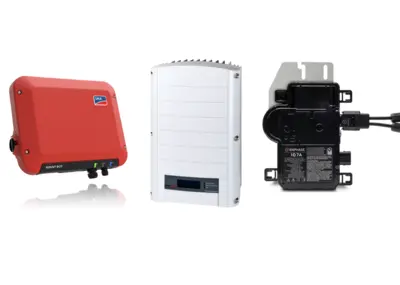
Dijkman Zonne-energie works with three types of inverter: the classic string inverter, SolarEdge with optimisers and Enphase microinverters. Each has its own advantages, and an adviser can tell you which suits your situation. Read more about the different inverters or about which inverter suits you best in our blogs.
-
My solar panels sometimes cut out. How does that happen?
More and more people in the Netherlands are fitting solar panels, so more and more energy is generated and fed back. That overloads the grid, because all the surplus has to go back at the same time, and the inverter switches itself off as a result. As soon as the voltage on the grid falls, it switches itself back on.
The problem cannot be removed entirely, but you can take steps to keep its effect on your yield as small as possible. Read about it in our blog "Why solar panels cut out".
-
How many solar panels do I need to charge an electric car?
An average electric car needs 8 panels to cover the charging. For a hybrid, which runs on both electricity and fuel, 5 panels will do. Charging an electric car costs far less than running a petrol car. Read more in our blog "solar panels for an electric car".
-
How many solar panels do I need for a hot tub?
To cover a hot tub's consumption over a year, about three panels are needed. Read more in our blog about solar panels for a hot tub.
-
Do solar panels give any yield in winter?
That panels do not work in autumn and winter is a common misunderstanding. They need light to generate energy, and that light need not be direct sunshine. They do yield more when the sun is out in full, but they generate on cloudy days as well. Read more in our blog "Solar panels in winter".
-
Do I have to clean my solar panels?
Panels come with a coating that protects them from dirt. Cleaning them straight away takes that coating off, so we would advise leaving them for the first three years. After that you can check once a year whether a clean is needed. Our blog tells you all about cleaning solar panels.
-
My energy management system is set to "imbalance trading" (through Frank Energie). Why does my battery no longer charge on my own solar power or at low dynamic prices?
When we have set your energy management system, at your request, to "imbalance trading" and linked it to Frank Energie, its role changes. In that mode the system works mainly as a gateway, which means it passes the control signals from Frank Energie on to your battery.
Frank Energie uses your battery to trade actively on the imbalance market. Their control is aimed at responding to shortages or surpluses on the grid, which can bring a financial benefit.
Because Frank Energie controls the charging and discharging, your battery does not in this mode respond primarily to your own solar production or to the hourly dynamic prices, as it would in other modes such as "save on costs" or "maximise self-consumption". The signals from Frank Energie for imbalance trading take priority.
Do you have questions about when exactly your battery charges or discharges in this mode, or would you like to know more about the imbalance trading strategy? Then it is best to contact Frank Energie. They decide the control and can explain why particular choices are made.
More about the control modes you can choose for your Dijkman energy management system is here: Control modes PDF
For more about smart power trading and imbalance, see the information from Frank Energie: Frank Energie - smart power trading -
I recently had an installation carried out but have not yet received login details. When can I expect them?
It can indeed take a little while before you receive the login details for our system after an installation, whether that is solar panels, a battery, a charging station or a water heater. The process usually takes five working days at most.
After the installation we run a number of internal checks to be sure everything is fitted correctly and working properly. Only after that check are your login details generated and sent to you.
Have you still not received them after five working days? Then please contact us at service@dijkman.nl and we will look into it for you.
-
I have forgotten my login details. What should I do?
No problem, resetting your password is simple. There are two ways to do it:
In the app:
-
Open the Dijkman app on your phone or tablet.
-
Go to the login screen.
-
Tap the link or button that says "Forgotten your password?".
-
Follow the instructions on the screen to set a new password.
On a computer:
-
Go to this website in your browser: https://monitoring.dijkman.nl/
-
On the login page you will see a link or button that says "Forgotten your password?". Click it.
-
Follow the instructions on the website to set a new password.
After that you usually receive an email with instructions for resetting your password. Do check your spam or junk folder as well.
Cannot remember which email address your account was created with?
Then contact us at service@dijkman.nl and we will help you find your account details. -
-
Can I set for myself when my home battery charges or discharges?
No, it is unfortunately not possible to decide that by hand. Our energy management system is designed precisely to automate the process and take the work off your hands.
The system continuously analyses several things: what you use, what your solar panels generate (if you have them) and the current energy prices. From that it decides automatically on the best moment to charge or discharge your battery, so your energy is always stored and used in the most efficient and cost-effective way.
So you have nothing to do yourself. The system works entirely automatically in the background.
Would you like to know more about how our system steers things? Our document about the control modes has the detail: Control modes PDF
-
I sometimes see my battery feeding a little power back to the grid, or drawing a little from it, while the battery does not seem to be full or should still have capacity. How does that happen?
That is right, and it is a deliberate choice in how our energy management system steers things. A small safety margin is built in to protect your battery and extend its life.
Power use in a house can swing quickly and unpredictably. To keep your battery from having to absorb constant small, fast changes in load, which is hard on it, the system holds a small reserve in some situations. That is why a few watts may be drawn from the grid, or fed back to it, even when your battery is not yet fully charged or seems to have capacity left.
In this way the system looks after your battery and keeps it running steadily. At the same time we keep improving the way it steers, so that as much of your own power as possible is put to use.
Would you like to know more about how our system steers things? Our document about the control modes has the detail.
-
This morning the schedule for my charging station or home battery was different from what I expected yesterday. How does that happen?
That can indeed happen. Our energy management system is dynamic and adjusts the charging and discharging schedule on the basis of several factors. Two of them matter most:
Expected yield:
The system allows for what your solar panels are expected to generate, if you have them. That expectation is based on the latest weather forecast.Dynamic energy prices:
Are you on a contract with dynamic prices? Then they weigh heavily in the schedule. The prices for the next day are published daily at around 13:00.Because the system does not yet have the exact prices for the next day before 13:00, the schedule you saw in the morning can look different later on. As soon as the new prices are known, the system reworks the schedule to charge and discharge as cheaply as possible.
So the schedule may well change once the dynamic prices come through. That way you take full advantage of the best moments to use or store energy.
-
I want to register my home battery for imbalance trading through Frank Energie. How do I do that?
If you would like to register your home battery for imbalance trading through Frank Energie, send an email to our service team.
Email: service@dijkman.nl
Please state your address clearly in the message.Our service team will take your request in hand and tell you what further steps are needed.