

• Personal advice
  • Installed within 6 weeks
  • Affiliated with SGZE
  • Certified company
Carefree enjoyment of the sun
Free consultation

Working out the capacity of a home battery

How to do it

Brick house with solar panels on the roof, by the water with a wooden jetty in the foreground

With dynamic energy rates, feed-in charges and the possible end of net metering, a home battery is becoming more attractive all the time. It stores solar energy so you can use it when the sun is not shining. But how do you decide on the right capacity for your situation? This blog explains how to work it out.

Brick house with solar panels on the roof, by the water with a wooden jetty in the foreground

Why a home battery?

Before we get to the sums, it helps to understand why a home battery is a sensible investment. It stores the energy you generate during the day for use in the evening and at night, which can cut your energy bill considerably, because you do not have to buy that energy from your supplier.

Do you have a dynamic energy contract? Then it pays to make use of the price swings. With our smart energy management system and the Max Save package your battery charges when rates are low.

Net metering is also likely to end in the coming years, and it would be a shame to lose your surplus solar energy then.

Read more about energy management
Illustrated mascot Max with an orange quiff showing a smartphone with the Dijkman Zonne-energie energy app

What is the capacity of a home battery?

Battery capacity is measured in kilowatt-hours (kWh), which says how much energy it can store. At Dijkman Zonne-energie we offer modules of 5 kWh that stack, so you end up with the right capacity. But how do you know how much you need?

Step 1: what do you use?

The first step is to look at what you use today, which you will usually find on your energy bill as an annual figure in kWh. It is also worth thinking ahead: whether you plan to cook on electricity, say, or to have a charging station fitted. Divide the annual figure by 365 to get your daily use.

Step 2: how much solar energy do you generate?

If you have solar panels, you want to know how much they generate, because the size of the battery should match the system. The app that comes with your system usually shows the yield.

Step 3: working out the capacity of a home battery

A handy rule of thumb is to allow 1 to 1.5 kWh of capacity per kilowatt-peak (kWp). Watt-peak is the maximum electrical output of your panels under standard conditions.

An example: with a system rated at 4.4 kWp (10 panels of 440 Wp), a battery of about 6.6 kWh suits best. You could choose two modules of 5 kWh, which gives you 10 kWh of storage in total.


Step 4: choose the right capacity

Working out the capacity of your home battery matters if you want to make the most of the energy you generate. By looking at what you use and what you produce, and working out how much you need to store, you can decide on the right capacity without difficulty. Our 5 kWh modules stack, so you always end up with the capacity your household needs. At Dijkman Zonne-energie we are happy to help you find the best solution for your situation.

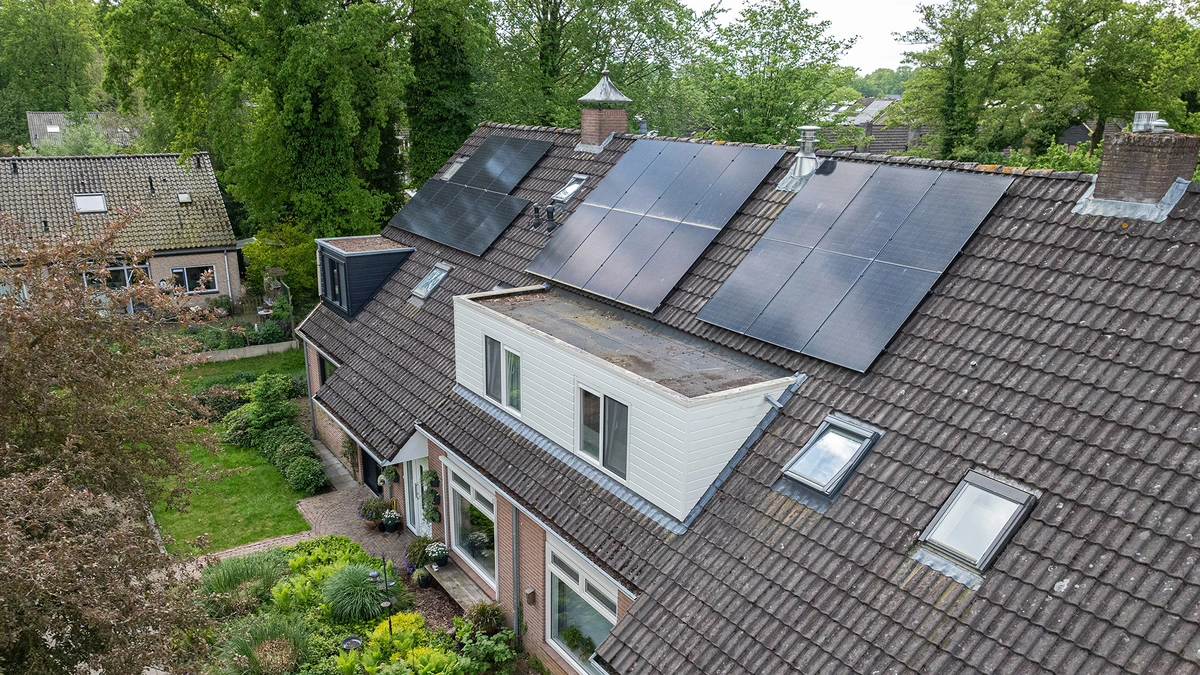
Aerial view of a terraced house with black solar panels on the tiled roof next to a dormer and skylights

Frequently asked questions

  • How long does a home battery last?

    A home battery usually lasts 10 to 15 years, depending on the type and on how often it is charged and discharged. The batteries we supply at Dijkman Zonne-energie are of high quality and built to last. Regular maintenance and sensible use extend their life further.

  • What happens when the home battery is full?

    When the battery is fully charged and your panels are still generating, the surplus is usually fed back to the grid. We would advise you to read your energy contract so that feed-in charges do not catch you out.

  • How do I know whether my house is suitable for a home battery?

    Almost any house can take a home battery, although it depends on things like the space available, the existing electrical installation and how much energy you use. Our advisers are happy to look at your situation and recommend the best options.

Ruben, adviser at Dijkman Zonne-energie
Ruben

Want to know more about home battery capacity?

Request a consultation with Ruben

Ruben is an adviser at Dijkman Zonne-energie and is happy to answer all your questions about home batteries.

Request a consultation No obligation!
Ruben, adviser at Dijkman Zonne-energie
Ruben

Also worth reading...

A dynamic energy contract and solar panels

What is a dynamic energy contract? And why choose one if you have solar panels and a home battery?

Read more

Types of charging stations: which one should you choose?

In this blog we explain which types of charging stations there are and which features suit your situation best.

Read more

Denim Solar solar panels

Discover the Denim Solar bifacial panels, rated at 440 Wp. These high-grade panels are made by a Dutch brand using proven technology. Read on to find out all about this type of panel.

Read more