Net metering and the feed-in payment for solar panels
What is net metering? Why is the scheme being phased out and what will replace it?
Read moreThe whole country is going green: more and more roofs carry solar panels. With energy prices where they are, the number of households with panels has doubled in the past five years. That makes the electricity grid busier, which can cause panels to cut out on sunny days.
In this blog Maik explains why the inverter of your system sometimes stops, and what you can do about it.
Until a few years ago the electricity grid was one-way traffic: energy came from the grid to your house and that was that. Solar panels are now part of the street scene, and you can feed power back when you generate more than you use, which is what net metering means. That makes the grid a good deal busier and causes voltage problems, especially on sunny days when a lot of power is generated and little is used.
But how does the grid become overloaded? On fine days with plenty of sun the voltage can rise too high. The panels generate a great deal while households, and businesses at the weekend, use little. All the surplus is fed back at the same time, and the voltage on the grid rises.
The standard voltage of the low-voltage grid in the Netherlands is 230 volts. Energy companies have to supply within -10% and +10% (averaged over a quarter of an hour). Legally the grid voltage may therefore never exceed 253 volts anywhere (230 + 10%).
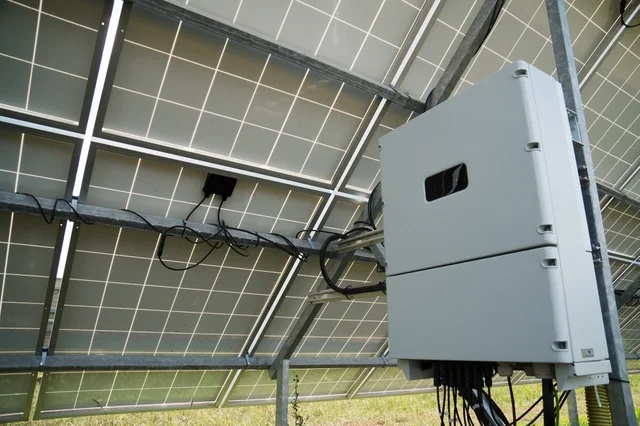
When the grid is overloaded, the inverter switches itself off. Every inverter has a built-in mechanism that shuts it down automatically as soon as the grid voltage rises above 253 volts, which keeps your electrical appliances from failing or being damaged. Once the voltage on the grid falls again, the inverter comes back on by itself.
Having chosen solar panels you naturally want the best possible yield and to feed as much as possible back to the grid, so we understand it is annoying when your panels stop for a while. Happily the voltage runs too high for only about 11 hours a year on average, which is less than 1% of the hours of sun in the Netherlands.
As long as the legal rules and the 253-volt limit stand, panels will sometimes cut out. You can take steps to keep it to a minimum, although the problem cannot be removed entirely. So what can you do? First, make sure your grid operator knows about it. In areas with many solar panels they can lay heavier cables and install extra transformers to steady the voltage.
A thicker cable between the meter cupboard and the inverter also helps, because it keeps the voltage rise between the two as small as possible. The further the inverter is from the cupboard, the thicker the cable has to be.
It is also wise to use power at the moments when the voltage on the grid is highest. Run the washing machine or the dishwasher during the day rather than in the evening: because those appliances draw power, the voltage on the grid drops and the inverter does not have to switch off.
There are also smart appliances now that use power exactly when your panels are generating. Smart washing machines, dishwashers and charging stations can be set to pick the best moment themselves.
If you are considering solar panels, a busy grid does not sound encouraging. Nobody wants to lose yield. Happily it has little effect on small users; heavy users ask far more of the grid and notice it more. And of course you can use the solar energy you generate, which means buying less from the grid and a lower energy bill.

Maik is service coordinator at Dijkman Zonne-energie and is happy to answer all your technical questions.
What is net metering? Why is the scheme being phased out and what will replace it?
Read more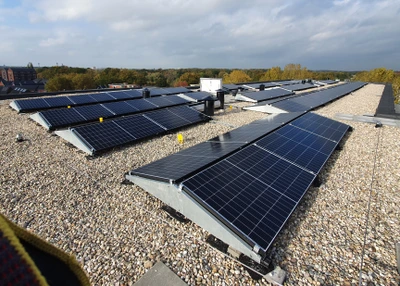
I have a flat roof, can I have solar panels too? Certainly. A flat roof even has a few advantages.
Read more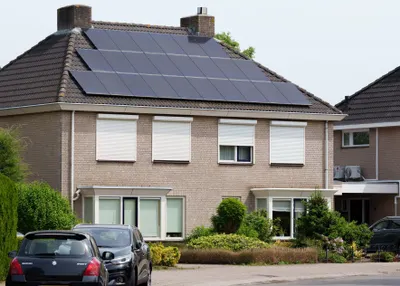
How do solar panels work? Our adviser Hans explains where solar energy comes from, what the inverter does and where panels work best.
Read more