

J.Boerman 9
“De installalatie keurig volgens offerte en tijdsplanning snel en vakkundig aangebracht.”
The yield of solar panels changes from month to month. Several things affect it: the time of year, the type of roof, the angle and the type of panel. This blog looks at the average monthly yield and at what shapes it.
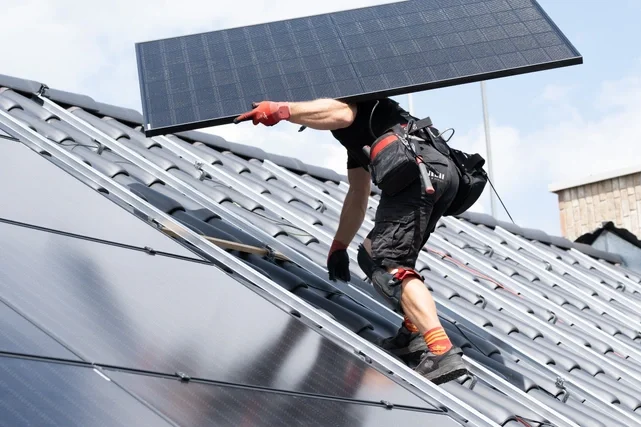
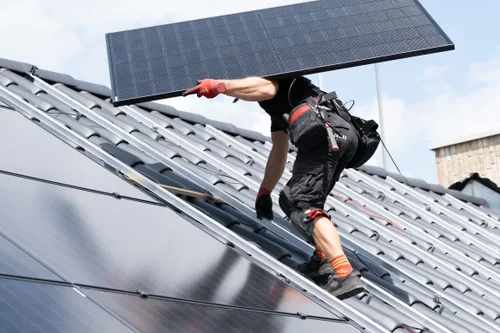
To give you an idea of what panels produce in a month, we have worked through an example. Bear in mind that the yield varies with the type of panel and with where it is installed.
In this example we assume one panel is rated at 440 Wp on average. With 10 panels of 440 Wp each you have 10 x 440 = 4,400 Wp installed.
The weather in the Netherlands is not always sunny, so panels do not produce electricity at their peak rating all the time. When working out the yield we therefore use a factor of 85%, which means about 0.85 kWh of electricity per 1 Wp. For 10 panels the annual yield comes to 0.85 x 4,400 = 3,740 kWh, which works out at an average of 312 kWh a month.
At an average of 312 kWh a month, 10 panels give a steady supply, and most of all during the summer when the yield peaks. But why does it vary from month to month? Several things shape it. In the Netherlands four matter most: temperature, the position of the sun, hours of sunshine and cloud cover. Each of them has a real effect on how much energy panels produce.
Temperature: lower temperatures suit solar panels, because they work more efficiently when cool. Panels perform best between 20 and 25 degrees.
The position of the sun: the angle at which sunlight reaches the earth changes with the season. In summer the sun stands higher, which means more direct radiation.
Hours of sunshine: how long the sun shines differs sharply from month to month. More hours means more energy generated.
Cloud cover: cloud reduces the direct sunlight that reaches the panels, which can lower the yield.

The yield varies a good deal by season, because the factors above differ per season. Here is an overview:
Spring: the days grow longer and the hours of sunshine increase. Temperatures are usually mild, which suits the panels. April and May are often when the yield starts to climb, with May one of the best months thanks to the balance between sunshine and temperature.
Summer: June, July and August give the highest yield, because the days are long and the sun plentiful. Temperatures can be higher, which lowers the efficiency slightly, but the amount of sunlight more than makes up for it.
Autumn: the yield falls again as the days shorten and the sun grows scarcer. Temperatures stay reasonably mild, which helps the efficiency, but the drop in sunlight lowers the total. September can still be a good month, while October and November fall away considerably.
Winter: December, January and February give the lowest yield, because the days are short, the sun stands low and the sky is often cloudy. The low temperatures do suit the efficiency of the panels, but the lack of sunlight is what limits the result.
May is the best month for solar panels, thanks to an ideal combination of factors. With the most hours of sunshine in the year and a pleasant temperature, panels usually do better than in June or July. That balance between sunshine, radiation and temperature makes May the most favourable month.
The worked example assumes 10 panels, but the number you need to cover your monthly use may differ. Several things play a part: what you use in a year, the rating of the panels you are considering and the size of your roof.
Find out how many solar panels you need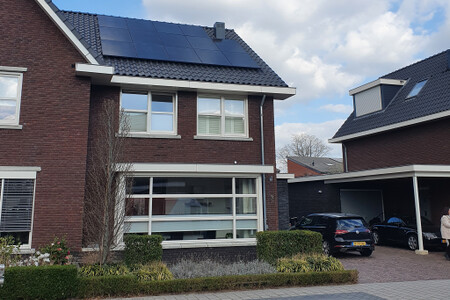
Would you like to know exactly how much energy your panels and your other equipment generate each month? Max Control makes it simple. Through an app, Max Control gives you a detailed view of what your systems produce.
Read more about Max Control

“De installalatie keurig volgens offerte en tijdsplanning snel en vakkundig aangebracht.”
Mark is an adviser at Dijkman Zonne-energie and is happy to answer all your questions about solar panels. A consultation can be online, by phone or at your home.
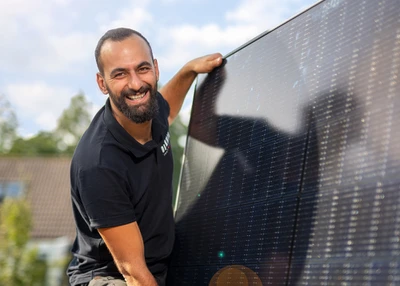
Curious how solar panels are actually installed? This blog walks you through it.
Read more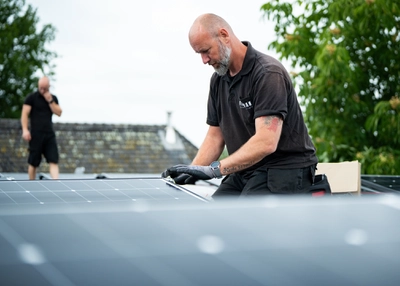
We are asked more and more often whether solar panels are still worth it. This article looks at what changing energy prices, the feed-in charge and the end of net metering mean for you.
Read more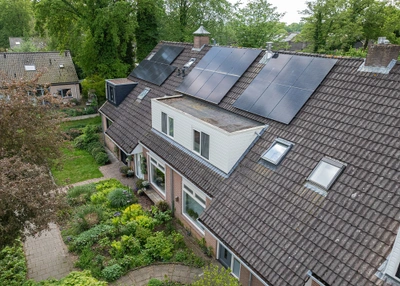
The government has presented its new plans, including the end of the net metering scheme in 2027. This blog explains what that means.
Read more