

J.Boerman 9
“De installalatie keurig volgens offerte en tijdsplanning snel en vakkundig aangebracht.”
When you are about to buy solar panels, or have just done so, you naturally want to know how it all goes. What does installing solar panels involve exactly, and what can you expect? In this blog adviser Ruben tells you everything about connecting them.
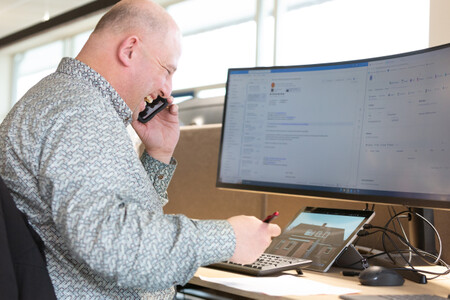
Before we fit the panels we naturally look at your situation first. Once you have taken the free solar check on our website, an adviser calls you or comes round for a consultation.
To put together a quote that fits, we ask you beforehand for a photograph of the roof, where that is possible, and of the meter cupboard. Then we can see together whether your roof is suitable for solar panels in terms of size, and whether anything has to be changed in the meter cupboard. Once we have everything, we make a quote and a layout plan showing how many panels we will fit, where they go on the roof and what they will produce.
Have you accepted the quote? Then we get to work. Your project first goes to work preparation, who arrange all the materials: the panels, the inverter and the mounting kit. Planning then schedules the engineers and makes sure you know when we are coming to fit the panels.
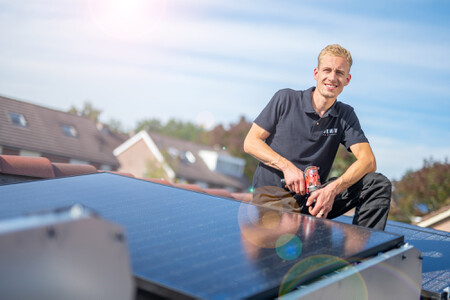
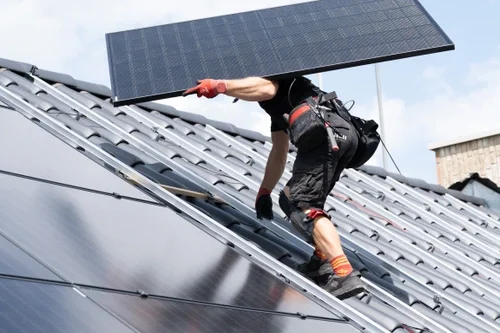
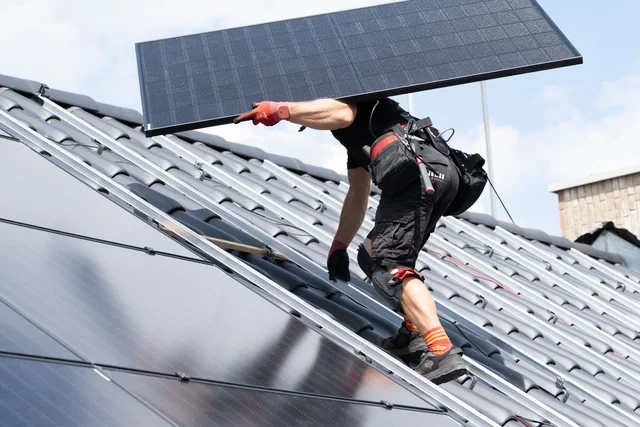
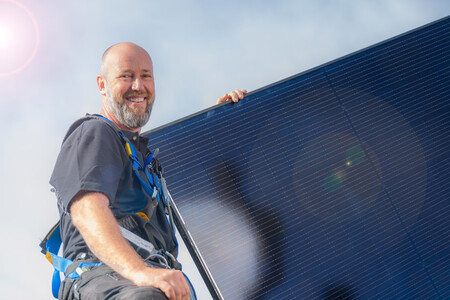
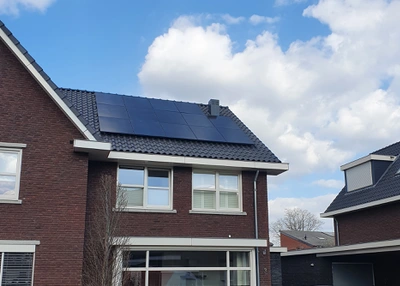
On the agreed day the team comes to fit your panels. How they do it depends on the roof. On a flat roof they mount the panels on a frame at an angle, which gives the best yield. On a sloping roof they first fit roof hooks and the rails the panels rest on, then mount the panels on the rails and tuck all the cabling away. They also line everything up neatly, so the panels sit squarely beside one another.
Once the panels are up, the electrician connects the inverter. How that is done depends on the type. You will have agreed with your adviser beforehand which inverter suits your situation best.
Some installations have a central inverter between the panels and the meter cupboard, either a classic string inverter or one with optimisers. The inverter turns the direct current from the panels into alternating current. Have you chosen an Enphase system? Then it works a little differently: there a microinverter behind each panel does the converting, so alternating current goes straight from the panels to your meter cupboard.
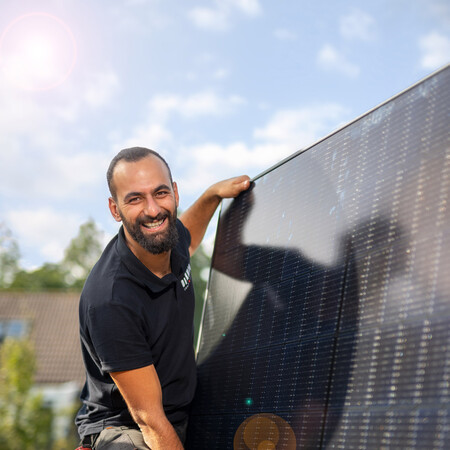
Do you have a system with a central inverter? Then the electrician connects it in the meter cupboard to a separate circuit with an earth leakage breaker, and that circuit is connected to your meter. There are several types of electricity meter: an analogue meter with a rotating disc, or a smart meter, suit solar panels best. The advantage of a smart meter is that you can see exactly how much you use and how much your panels have generated.
With the Enphase system the panels are connected directly to a free circuit and to the meter in the cupboard. A Q-relay is fitted as well, which disconnects the system if the grid voltage rises too high, along with an Envoy-S. That small unit monitors what your system produces, which you can then see per panel in the app.
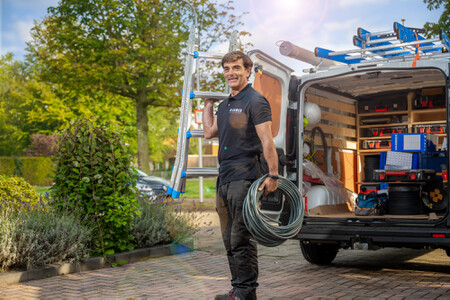
Now that your panels are installed, you naturally want to follow what they bring in. You can do that on your phone or tablet in the monitoring app, and we are happy to help you set it up. After the installation we also contact you about the VAT refund. Want to know more? Our blog "the installation is finished, what now?" tells you everything.
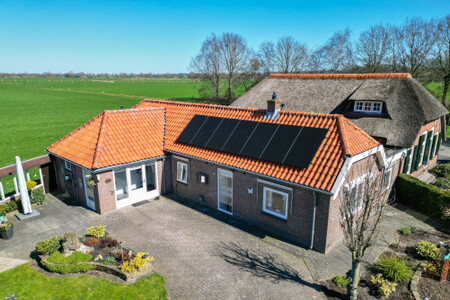


“De installalatie keurig volgens offerte en tijdsplanning snel en vakkundig aangebracht.”
Ruben is an adviser at Dijkman Zonne-energie and is happy to help with all your questions about solar panels.
What is net metering? Why is the scheme being phased out and what will replace it?
Read more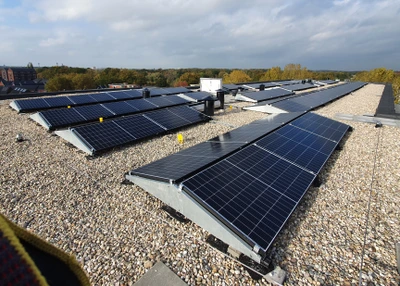
I have a flat roof, can I have solar panels too? Certainly. A flat roof even has a few advantages.
Read more
How do solar panels work? Our adviser Hans explains where solar energy comes from, what the inverter does and where panels work best.
Read more