

J.Boerman 9
“De installalatie keurig volgens offerte en tijdsplanning snel en vakkundig aangebracht.”
In winter the days are shorter and there is less sun. Even so, solar panels still generate energy. In this blog adviser Hans tells you more about what panels yield in winter and what to do when snow settles on them.
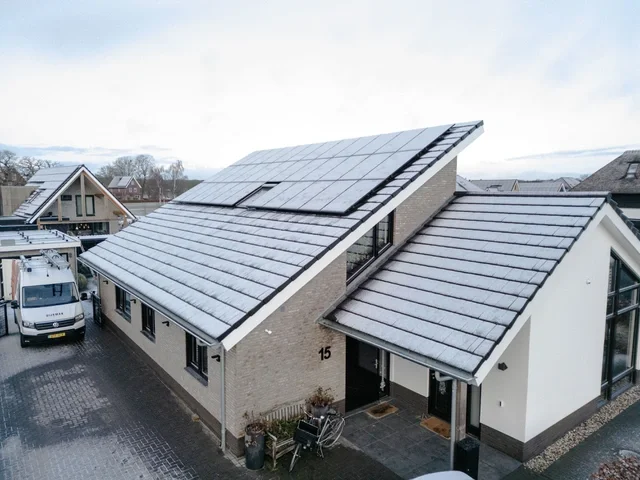
That panels do not work in autumn and winter is a common misunderstanding. They need light to generate energy, and that light need not be direct sunshine. They do yield more when the sun is out in full, but they generate on cloudy days as well.
There is less sun in autumn and winter, so the panels generate less than in summer, while you use more. That is no bad thing: at the moment you can still use net metering, which means the surplus you feed back in summer is set off against the power you use in winter. Your supplier settles it at the end of the year, and if you have fed back more than you used, you even receive a payment. Very favourable indeed.
Please note: a number of suppliers charge a feed-in fee for power fed back to the grid.
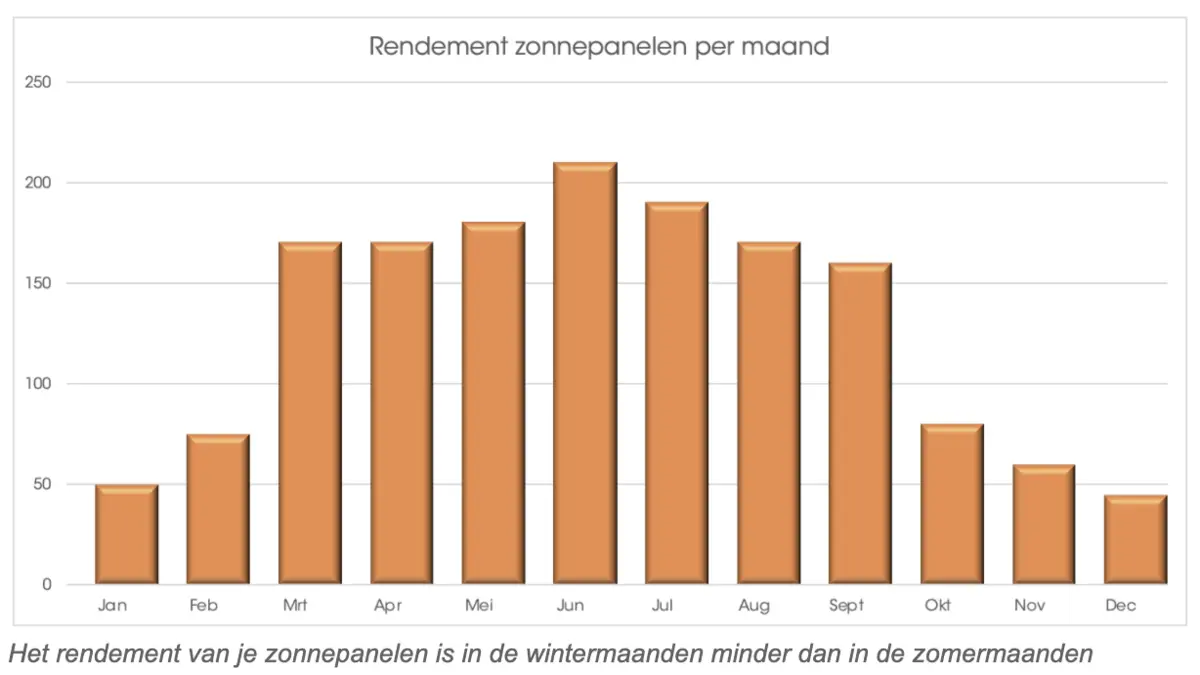
The yield of your panels is lower in winter than in the summer months. The picture below shows it month by month.
Did you know panels perform best when they stay cool? In high outdoor temperatures a panel can overheat, which raises its conductivity and lowers the voltage. That is why a panel yields less than you might expect on a very hot, bright summer day. To keep panels from getting too warm it is wise to leave enough room between the panels and the roof for ventilation. Every Dijkman engineer allows for that as a matter of course.
In winter the sun stands lower, so the angle at which its light reaches the panels changes. An east-west layout gets the most out of that, because panels facing both east and west catch sunlight over a wider part of the day. In winter, with its short days, that is favourable: the yield is more efficient and steadier.
When a lot of snow falls and stays on the panels, the yield can drop, perhaps to nothing. On the other hand, panels can actually produce more when there is snow around them and the panels themselves are clear, because the light reflects off the snow and the panels catch more of it.
Snow usually slides off the panels by itself once it starts to thaw. To keep it from staying there, one option is to raise the angle of the panels to 40 degrees, which usually lets the snow slide straight off and keeps your yield as high as possible. Is that not possible for you? Then it is best to push the snow off with a soft brush. Frozen snow or ice should be left alone, because removing it can damage a panel. And do mind your own safety if you go on the roof.
A solar panel system can easily carry the weight of a good layer of snow, so there is no need to fear that a heavy snowfall will damage your panels.
Even during the cold months your panels generate solar energy. When the days are short and you are out during the day, you may not be able to use it straight away. Storing it is then a good alternative.
Read more about the home battery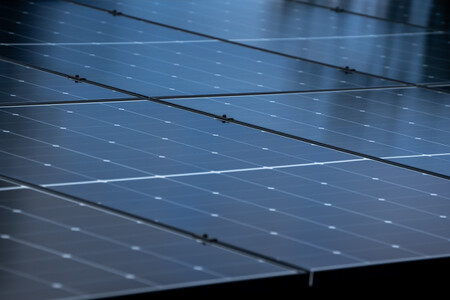
It makes no difference what time of year you buy solar panels. They last for decades, so whether you start enjoying the sun in summer or in winter, the yield across all those years is the same. Things are often a little quieter at Dijkman Zonne-energie in the winter months, which means your panels are on the roof sooner.
During autumn and winter the sun is less fierce, so panels produce less than in summer, and snow that stays on them lowers the yield further. Curious what your panels generate on a winter day? Find out with Max Control. Through this handy app you see in detail how your panels and your other sustainable equipment are performing.
Read more about Max Control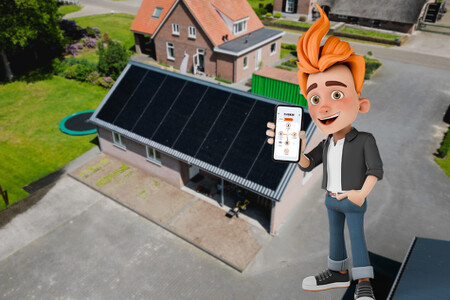

“De installalatie keurig volgens offerte en tijdsplanning snel en vakkundig aangebracht.”
Hans is an adviser at Dijkman Zonne-energie and is happy to answer all your questions about solar panels.
What is net metering? Why is the scheme being phased out and what will replace it?
Read more
I have a flat roof, can I have solar panels too? Certainly. A flat roof even has a few advantages.
Read more
How do solar panels work? Our adviser Hans explains where solar energy comes from, what the inverter does and where panels work best.
Read more